

Toni KOTNIK

Design of Structures: Research into configurational logics
In architecture as well as in engineering, structural design is often viewed as mere problem of stability and efficiency. But structures, understood as relationship between elements, are articulations of order, are patterns of organization with architecture arguably the most prominent manifestation of the basic human activity of structuring the environment we are living in. Structures in architecture, thus, are not only physical but also conceptual. Structures are a medium of expression of design ideas that traverse all scales of architecture. Based on such an understanding, the lecture tries to sketch a research into the configurational logic of structures as an interdisciplinary research project with architecture at its core.
Toni Kotnik is Professor of Design of Structures at Aalto University in Helsinki, Finland. He studied architecture and mathematics at Germany, Switzerland and the US and received his PhD in mathematics from the University of Zurich as well as a Master in Computational Design and Digital Fabrication from the ETH. Before joining Aalto he taught among others at the ETH in Zurich, the Architectural Association (AA) in London, the Institute for Experimental Architecture at the University of Innsbruck and the Singapore University of Technology and Design (SUTD). He has been lecturing at leading universities worldwide like Harvard, MIT or Bartlett but also at important museums like the Guggenheim in Bilbao or the MOMA in New York. His practice and research work has been published and exhibited internationally, including the Venice Biennale, and is centered on the integration of knowledge from science and engineering into architectural design thinking and the exploration of organizational principles.
–––
Gediminas URBONAS

Swamps and the New Imagination
Hope and the future for me are not in lawns and cultivated fields, not in towns and cities, but in the impervious and quaking swamps”, maintained Henry David Thoreau, who loved to write about wetlands and to be written by them. Today, revalorising the swamp over solid ground as well as exploring its complex web of interactions appears to be far from the romantic clichés of ‘Noble Savage’ and ‘Back to Nature’. We cannot get back to the marshes, as there is no objectively fixed environment we are to return to. The instinctive and natural behaviour cannot undo our civilization, but rather provokes the conflict and discontent with(in) ourselves derived from social and cultural repression.
The swamp challenge is not about re-discovering our true identity, but rather about meeting with our intrinsic hybridity that transcends the human as a hermetic organism. Blurring the line between human and nature, the swamp prompts us to reimagine our relationships and potential interchange in the posthuman turn. Just as, along Bruno Latour’s lines, we have never been modern, the swamps have never disappeared: they have been in the background as an invisible symbiosis of different forms of life, as an interaction of elements and organisms, as a part of our denigrated premodern subconscious, of our urbanized fears and nightmarish dreams that signal the exposure to the danger of the unknown and induce into watery motion both objection and attraction to the uncanny.
So how do swamps foster our thinking? In what ways do the wetlands provoke our repressed imagination? How could swamps benefit architecture, given that every construction starts from land reclamation? As we know, many cities themselves have a swampy pasts and uncertain futures. The “floating cities” were built by applying solid foundation of wooden stakes and platforms to stabilize the moving environment of the wetlands. However, swamps did not cease to exist. They just colonized the cities from within, the same way their structures intervened into the waters.
Swamps and the New Imagination embarks upon a critical examination of the outcomes of today’s rediscovery of matter which constantly opens up itself through interplay of immateriality. The presentation intends to set up a discursive space not only questioning the distribution of territories as a means of organizing identities and realities, but also to envision the role of immaterial in the age of non-human turn and interspecies dialogue. A swamp is both a place for manifold symbiotic relationships, and a locus of imagination, fostering the dialogue with possible futures.
Gediminas Urbonas is artist, educator, and co-founder of the Urbonas Studio (with Nomeda Urbonas), an interdisciplinary research practice that facilitates exchange amongst diverse nodes of knowledge production and artistic practice in pursuit of projects that transform civic spaces and collective imaginaries. In collaboration with experts from different cultural and professional fields, these projects develop practice-based research models, merging a variety of materials and techniques from new media, urbanism, social science and ecology. The Urbonas’s work has been exhibited at the São Paulo, Berlin, Moscow, Lyon, and Gwangju Biennales; at the Manifesta and Documenta exhibitions; and in solo shows at the Venice Biennale and the MACBA in Barcelona among others. Recently their work was featured at Sao Paulo biennial (2016) and Folkestone Triennial (2017). Urbonas co-edited Public Space? Lost and Found (MIT Press, 2017) an examination of the complex interrelations between the creation and uses of public space and the roles that art plays therein. Urbonas are curating the upcoming Swamp Pavilion – future learning environment at the 16th Venice Architecture Biennale 2018. Gediminas Urbonas is Associate Professor at the MIT Program in Art, Culture and Technology (MIT).
–––
Gediminas Urbonas: Swamps and the New Imagination
Toni Kotnik: Design of Structures: Research into configurational logics
Plenary 1, Thursday 31 May 2018, 9.15–10.30
Otakaari 1X, 2nd Floor, room A2
Judith VAN DER ELST

Fish fly in the sea, Birds swim in sky
When humans are immersed in water instead of air, sound waves bypass the ear and enter through the bone behind the ear, so called bone conduction. Interestingly, the range of frequency that can be sensed in this way is believed to be about 10 times higher than what humans can hear on land through air, potentially increasing our ability to interpret our immediate environment and create new knowledge.
My work is based on the premise that what we know is a direct result of the interplay of our sensing apparatus with which we are equipped and the surrounding medium through which sensible stimuli are conducted. Other individuals and organisms in our immediate and extended environments pick up different signals and hence create different knowledge from our shared medium. The sum of each of these subjective interpretations can be thought of as the total knowledge or intersubjective knowledge.
In this presentation I will explore and discuss different sensing organs, the signals that can be sensed and how increased awareness and exploration of the –humanly- ‘unknown’ in our immersive spaces can help us create sustainable technologies to tap into intersubjective – ecological – knowledge. In order to do this I believe it is necessary and essential to develop novel embodied research methodologies that cross the art science boundaries.
Judith van der Elst is an archaeologist and creative entrepreneur currently residing on the EU continent. She studied and worked in New Mexico from 1999-2012, and as an archaeologist with artistic sensitivity her studies in New Mexico included collected earth sensory data at Native American sites of survival and struggle millennia ago where cultural materials and traditions were initiated through land based knowledge systems. She seeks to understand the principles and practices that underpin impressive adaptations to the land. Based on a simple idea that the western mind can only partially encompass human knowledge, she believes that many of these principles and practices are unintelligible to the western mind with its focus on the visual sense at the expense of other sensory sources of information that make up our spatial worlds.
With a passion for teaching and learning in the land, she currently leads a semi-nomadic lifestyle to explore the possibility of new rural-based ‘laboratories.’ As a creative practitioner she has long been interested and has used emerging, spatial technologies such as GIS and remote sensing. Increasingly she focuses on near-surface/ambient sensing /biosensors- to expand our experiential and embodied learning and comprehension toolkit in order to access different worlds in our sphere. No longer just a personal desire, she believes a new way of doing research and practice focused on embodied knowledge is necessary to face our future challenges toward a just and healthy world.
–––
Saara HACKLIN

“…without knowing what we will haul back in it”
Science, art and the phenomenological approach
Maurice Merleau-Ponty (1908-1961) developed his phenomenology in a dialogue with the arts. For him arts presented and source of inspiration, an exemplary approach to the world, comparable to the phenomenologist approach. In comparison, phenomenological discourse addresses classical sciences critically – Merleau-Ponty claims in “Eye and Mind” that “science manipulates things and gives up living in them.” For Merleau-Ponty, also photography presented an example of such practice. However, as we know, the dialogue of arts and sciences has a long tradition. Contemporary artists are using new technologies, sometimes critically commenting science, but also using its discoveries and interpreting them into new visual language. In my paper I will discuss some case studies, for instance works by Tuomo Rainio and Maija Tammi, and discuss the challenges and potential of Merleau-Pontian phenomenological approach.
Saara Hacklin is a curator and theorist based in Helsinki. She works at the Museum of Contemporary Art KIASMA as a collections curator. Hacklin has studied philosophy and aesthetics at the University of Helsinki. Her PhD in 2012 discussed Maurice Merleau-Ponty’s phenomenology, bringing it together with case studies of contemporary art. Besides research and curatorial work Hacklin has been a visiting researcher at the Jan van Eyck Academie, participated in discussions around art and criticism through various publications such as online journal Mustekala and taught art theory in different institutions, including Aalto University.
–––
Judith van der Elst: Fish fly in the sea, Birds swim in sky
Saara Hacklin: “…without knowing what we will haul back in it” Science, art and the phenomenological approach
Plenary 2, Friday 1 June 2018, 9.00–10.30
Aalto Studios, Otakaari 7, Studio Kipsari
Vladimir IVANOV
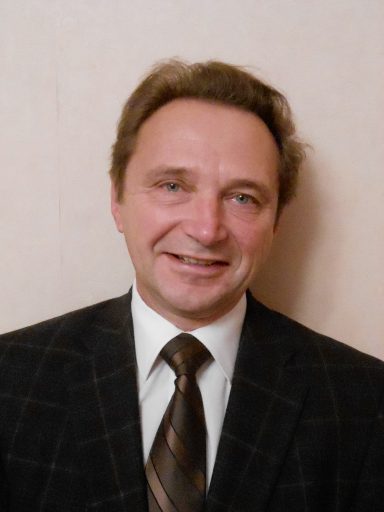
Using AR technologies in cultural heritage and in medical visualization
Augmented reality enables real-time interaction between the user, real objects and virtual objects. With this possibility we can increase user-experience, performance and raise the quality of services in many areas, such as museum exhibition, architecture and surgery. Proposed solutions helps visualize data that don’t exist or hidden in easy way. For cultural heritage it’s visualization of reconstructed objects in the way where user doctors easily prepare for surgery and see where internal structures are located during procedure, which makes it less invasive and improve rehabilitation time.
Vladimir Ivanov is Professor and Head of Engineering Graphics and Design Department at St.Petersburg State Polytechnical University, Russia.
–––
Collaboratory Methods for Heritage Workshop, Friday 1 June 2018, 11.00–16.00
Aalto Studios, Otakaari 7, Meeting Room 283
Roger MALINA

If it has to be plugged in it cant be art; celebrating the Leonardo network 50th
Leonardo is dead, Long Live Leonardos; Now to design culture for the digital age
The Leonardo Journal was founded by a group of artists and scientists in Paris in 1968. They were convinced that the contemporary artists must appropriate all relevant science and technologies to express themselves, but also the new worlds made visible through instruments. This year we celebrate the 50th anniversary of this community of practice championed by the Leonardo
Journal and organisations. By coincidence 2019 is also the 500th anniversary of the death of DaVinci on May 2 1519.
In this talk I will talk about the past and future of the the arts, sciences and technology within the context of an emerging digital age. No culture has ever redesigned itself intentionally. I argue that we must redesign our culture in order to face the anthropocene and the tragedy of the internet. We must also redesign science itself, both its methods and its social embedding. Welcome to Leonardo the Leonardo50 birthday party and a Leonardo500 wake celebration.
Roger F. Malina is a space scientist and astronomer, with a specialty in extreme and ultraviolet astronomy, space instrumentation and optics. He served as director of the Observatoire Astronomique de Marseille Provence and was NASA Principal Investigator for the Extreme Ultraviolet Satellite project at the University of California, Berkeley. He is also a publisher and editor in the new emerging research fields that connect the sciences and engineering to the arts, design and humanities. Since 1982 he has served as Executive Editor of the Leonardo Publications at MIT Press. He founded, and serves on the board of two non profits, ISAST in San Francisco and OLATS in Paris, which advocate and document the work of artists involved in contemporary science and technology.
–––
Nina CZEGLEDY

Hybrid Collaborations
Presently cross-disciplinary teams connect from remote locations and collaborate
in hybrid environments. Within the process of these collaborations many questions
emerge such as how is the most important element defined in such collaboration?
Are there any rules? Is there an applicable methodology? How are cultural
differences approached? How are the underlying artistic, social and political
motivations defined? While extensive flexibility, modularity and mutually satisfying
professional and personal relationships seem to contribute to the ultimate success
of the collaborative process many of these questions remain unanswered. My practice
is based on art, science and technology collaboration. This presentation is focused
on my three hybrid collaborations with the Digital Drama Lab, University of Toronto:
Homo Ludens – The Playing Body (2012), In-Between algorithms: Energizing matter/
Materializing energy (2016) and Rejection (2017).
Nina Czegledy, independent artist, curator and educator collaborates
internationally on art & science & technology projects. Locally relevant interdisciplinary
education (STEAM) and practice, inter-generational project involvement and the
paradigm shifts in the arts in a cross-cultural context inform her collaborations.
She has exhibited and published widely won awards for her artwork and has initiated,
lead and participated in conferences, forums and festivals worldwide. She is part of Leonardo Community.
–––
Roger Malina: If it has to be plugged in it cant be art; celebrating the Leonardo network 50th
Nina Czegledy: Hybrid Collaborations
Leonardo 50th Anniversary Dinner and Storytelling, Friday 1 June 2018, 19.30–22.30
Aalto Studios, Otakaari 7, Studio Kipsari
Speaker information and schedule in the programme is subject to change.